“Living Earth” by Rosalie Kohler
The Artist's Process


Living Earth


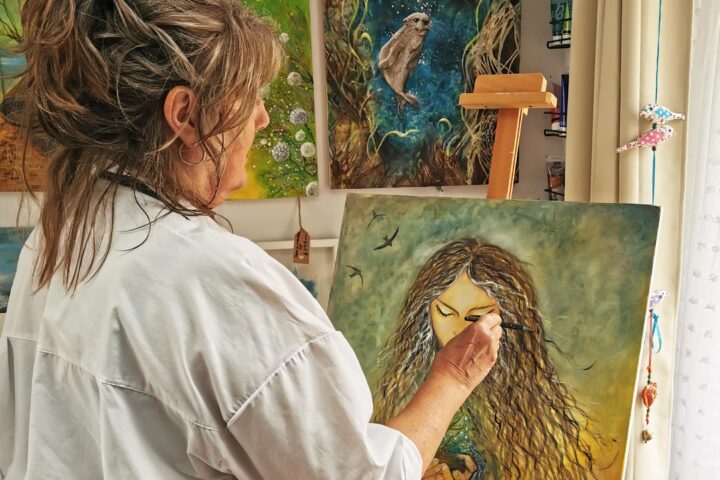


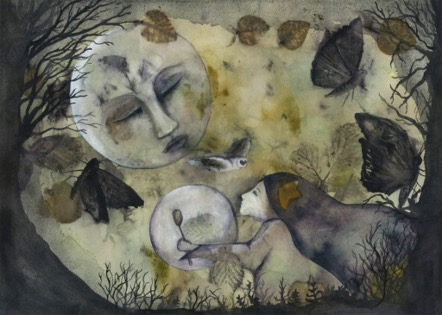


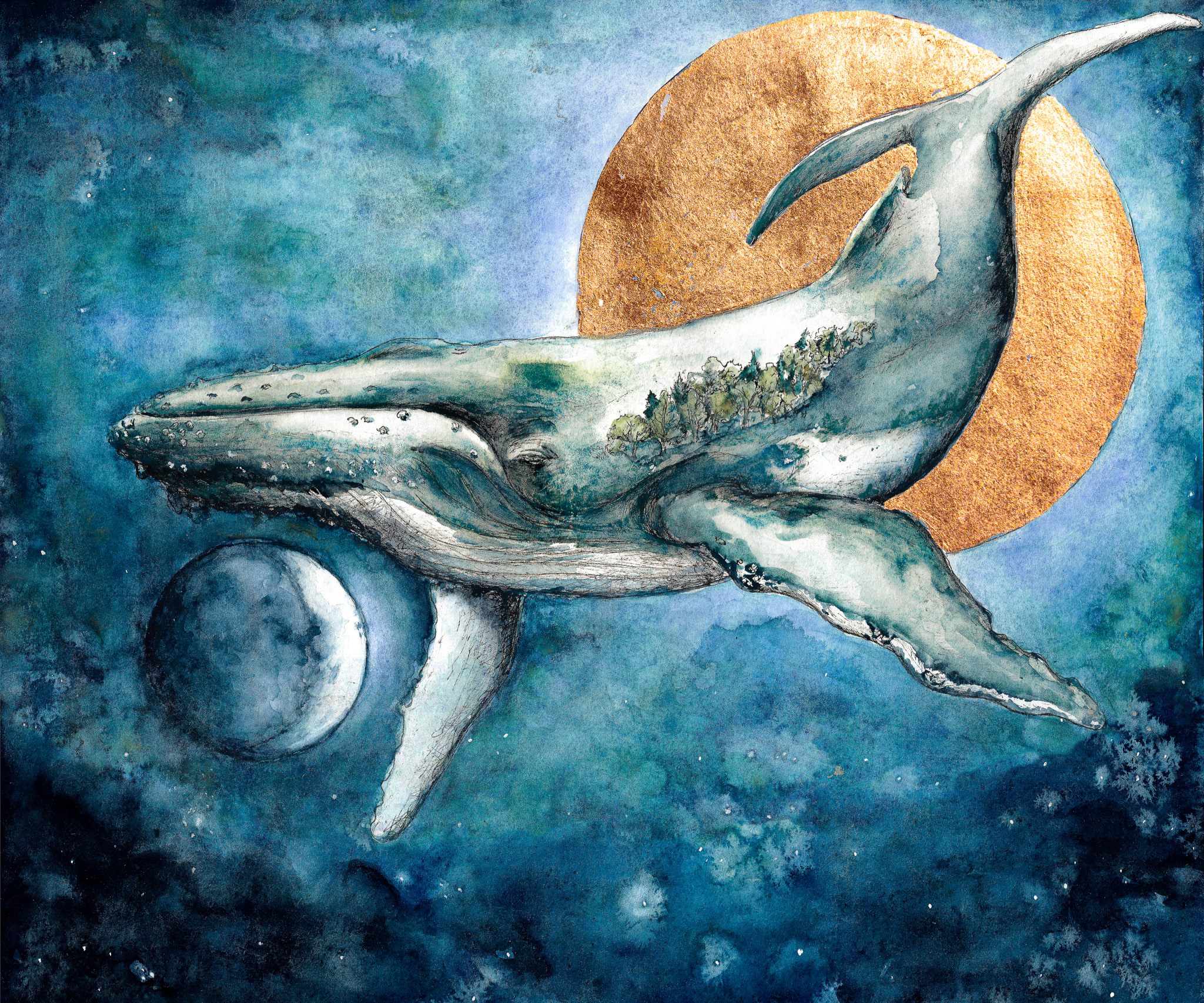
I was hoping to encourage a sense of reverence for our planet and to evoke perhaps a glimpse of interconnection with the web of life. I yearn to inspire the urge to protect not only these magnificent creatures, but Nature as a whole. And I long to plant seeds of hope that all is not yet lost, and that positive restorative change is possible.
I'm also aware of the recurring motifs of a gilded sun and moon in your work - would you like to say more about this?
The cycles and seasons of the year and the moon are intrinsic to my way of life, and they often find their way into my paintings through these gilded symbols. I love the contrast between the matt surface of the paint and the shine created by gold leaf. I feel the light gives another layer of life to the painting, inviting nature to interact with the image, changing throughout the day. For me it is also a way of pointing towards a more luminous, energetic layer of existence.
I am inspired by magical realism, folk art and symbolism, by myth, folk and fairy tale but most of all I am inspired by Nature. My images arise as I walk the spiralling path of rewilding. They are the fruits of remembering our belonging to the Earth, the felt sense of returning home. I explore the wisdom and medicine of the birds, plants and animals that become present in my life, the wheel of the year, the body of the Land and the land of the body.
I currently work in watercolour, ink and pigments from earth, minerals and plants, some of which I have foraged and mulled myself. I enjoy the act of co-creation with Nature in this way. The trees within the humpback’s body, for example, are painted with green earth pigments, so the image literally as well as symbolically carries earth.
I discovered the world of watercolour through Jackie Morris while reading stories to my son. I was absolutely captivated by her work – the layers of colour, the depictions of wildlife touched by the magical.
I enjoy the elemental experience of working with water and the challenge and delight that I am not entirely in control, for the dance of water and pigment will create forms and structures that I could never have envisioned. For me this is part of the magic of letting Nature speak.
April is usually one of the busiest months in the garden. To avoid that feeling of overwhelm with all that needs to be done I’ve found that planning tasks around the Moon rhythms can really help me to organise myself. The Solar Eclipse always happens at the new Moon: 8th April 2024 The UK will…
All my life, I have felt most at home in green spaces. Nature is my family—living beings in relationship with each other and with the Earth. So much of life exists because of the mutual support we call symbiosis. My work as a herbalist connected me deeply to nature, feeling awe and reverence for the…
by Polly Hall I’m going to be honest and say I’m not a morning person. I appreciate the promise that sunrise brings but I love the dark. I love dusk, and crepuscular is one of my favourite words. Dimsy dark as we like to say in Somerset – when you can spot the faery folk,…
by David Greygoose Writing is an act of tapping into the energies of the Earth We are shaped and moved by the energies of the Earth. These are all about us – in the depths of the soil, in the rhythm of the water and in the forces of the wind. They enter through us…
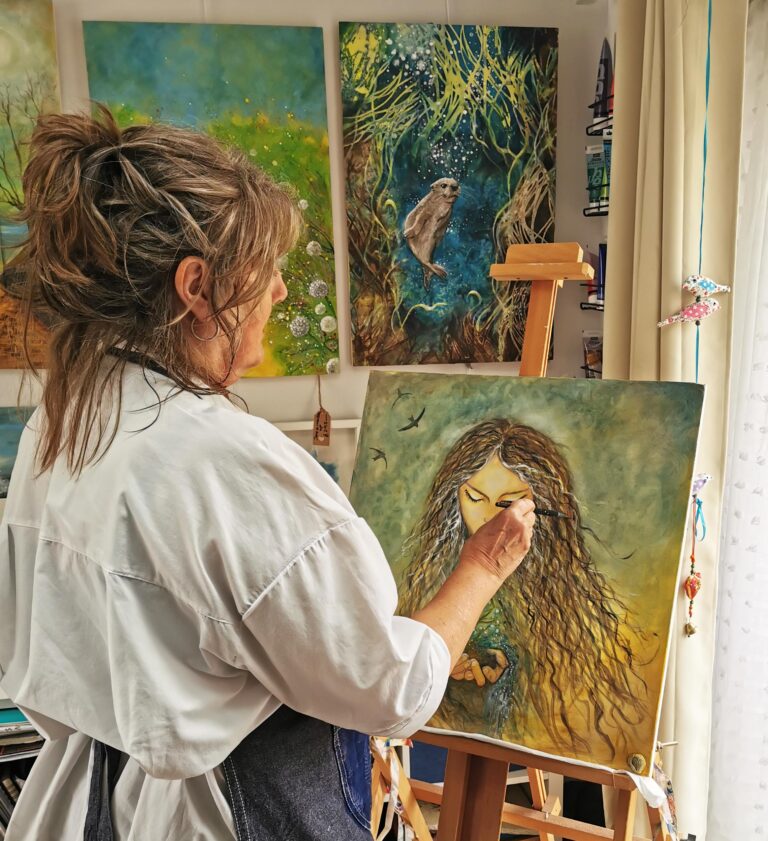
I have been an artist for as long as I can remember. My earliest and perhaps most lasting influence was my grandad, who introduced me to the natural world through walks in the woodland and time spent in his wonderful garden. He taught me about plants, the changing seasons and the importance of working with…

We set up The Foundation Apprenticeship in Sensory Herbalism Our in-person Foundation Apprenticeship in Sensory Herbalism is an immersive course that takes place throughout the seasons and offers an embodied, intuitive approach to herbal practice, plant communication, and Earth-based living. We Seed SistAs had been working together for several years when we decided that we’d like…